Although not the same emotional effect as primary research, secondary research is equally as important. Up until now, I have mainly only known what my parents have told me about what South Korea was like a couple decades ago. However, I was intrigued as what to Korea was like around the time my grandparents lived there, around 70 years ago.
An interesting factoid I had already known was that my grandparents lived in Korea back before the country was split into North and South.

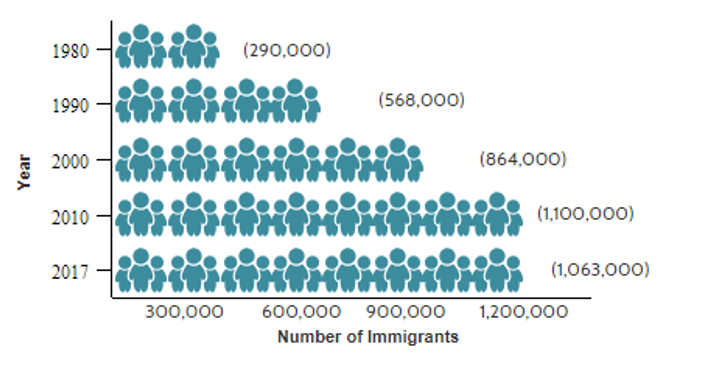
Both of my parents have immigrated from South Korea into the United States, as just last week my father celebrated 30 years living in the United States. I though this was interesting so I asked him why he moved. Although he had his own reasons, one could say that it’s due to the growing relations between the two countries. According to a source, “Since the 1960s, immigration from the Korean peninsula to the United States has increased dramatically, driven by political, economic, and military relations between South Korea and the United States.”
Although this applies much more to my extended family, religion is an important part of Koreans’ lives. In South Korea, “Confucianism, Buddhism, and Christianity are the main formal religions.” My extended family practices Christianity, whereas my family doesn’t practice any religion, and I have chosen to be Agnostic. Because I’m so used to my immediate family, I never knew that, “Many Koreans believe in the ancestral spirit and observe Confucian rituals. Confucianism is a political and social philosophy that pervades Korean culture.”
With more aspects pertaining to culture, family is one of the most important parts of customs and life in South Korea. Although I knew my parents fell in love, something I never knew about were that Koreans also had arranged marriages. However, as in most Asian cultures, something I have known from a young age was that having a son was important, as they were the ones to carry the bloodline and have the inheritance of the parents. As stated, “The eldest son bears extra responsibility to his family and it is supposed that he will care for his parents in their old age.” This is definitely no pressure for me at all : – )
The food is something that has a big part on my childhood, and traditional foods such as Kimchi and other Banchan (Korean word for side dishes), are a large part of Korean Culture. They are used in, “ceremonies, especially at weddings, birthdays and to honour ancestors.”
This is some of the information I have for now, but there is much more to come!
Sources:
https://www.migrationpolicy.org/article/korean-immigrants-united-states
commisceo-global.com/resources/country-guides/south-korea-guide
 The Future of Fashion
Hey Jinu, I loved your topic as it seems like you are getting to learn more about your own culture through your research. I’m super interested in learning more about some topics that you discussed like your parents’ arranged marriage, Korean food, the religious practices and more. Looking forward to reading your paper!
LikeLike
Hi Jinu! I found your topic to be incredibly interesting! I love how you chose to write about your culture and background. I look forward to learning more about Korean culture and I cant wait to see how you write about it. I also love the pictures and set up of your blog post.
LikeLike